About Us
IW Mining was founded in early 2016 in response to the numerous changes and challenges that the mining industry is dealing with and adapting to.
These include, the outflow of human skills, escalating costs, efficiency constraints and lower than expected commodity prices which has necessitated the need to re-evaluate and adapt processes as well as the way the mining industry conducts its business.
This ambitious and well-respected company boasts technical proficiency, backed by decades of industry experience
and common values which include an uncompromising commitment to the Environment, Safety and Quality.
IW Mining and Consulting Services currently operates within the gold, chrome and platinum mining sectors. We
have experienced and dedicated teams working in both surface and underground operations.
Our Story


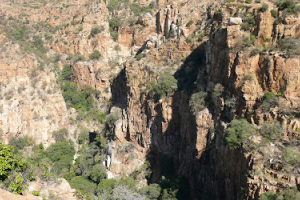
We specialise in developing ore bodies through different approaches and mining methods. These methods are usually dictated by the unique geotechnical challenges posed in different country rock.
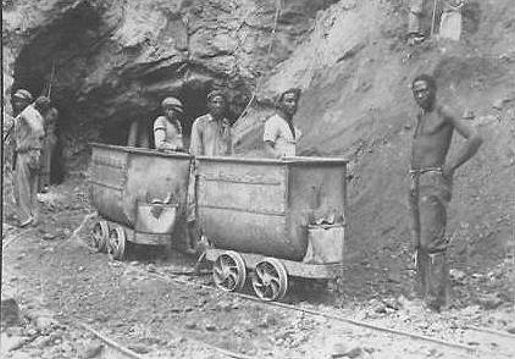
We are experienced in various extraction methods ranging from narrow reef to wide reef mining. This includes the supporting of these ore bodies with the aim to allow for zero harm mining.
The main focus of our business is operational excellence which positions us well in the mining industry. To achieve our aim we partner with experienced, skilled and reputable entities to provide the best possible services and outcome for our clients.
We pride ourselves by empowering all employees/communities with resources and training to ensure growth and understanding in the pursuit of knowledge.
“We believe that mines are built and not found, with the intrinsic principle to safely succeed.”
Directors
Ian Lowers
Director
30 Years Production Mining experience
MMC & COMSOC Certificate holder
Qualified Safety & Risk Management Practitioner

+27 71 530 1113
ian@iwmining.co.za
Willem Pelser
Director
40 Years Mining, Shaft & Construction experience
Mine Overseer Certificate holder
Pioneered Drop Raising Anglo American Platinum Mines

+27 83 444 9946
willem@iwmining.co.za
History of South African Mines
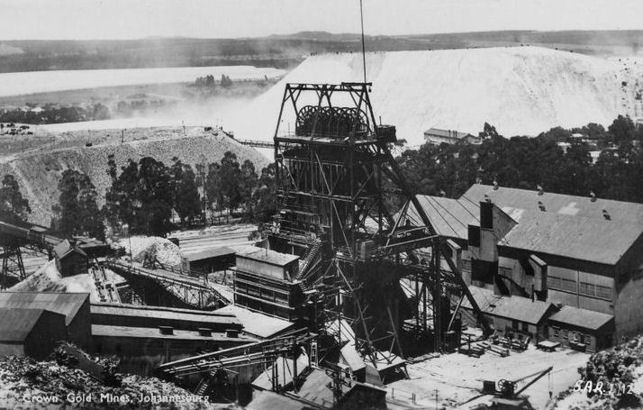
Mining in South Africa has been the main driving force behind the history and development of Africa’s most advanced and richest economy. Large scale and profitable mining started with the discovery of a diamond on the banks of the Orange River in 1867 by Erasmus Jacobs and the subsequent discovery and exploitation of the Kimberley pipes a few years later. Gold rushes to Pilgrim’s Rest and Barberton were precursors to the biggest discovery of all, the Main Reef/Main Reef Leader on Gerhardus Oosthuizen’s farm Langlaagte, Portion C, in 1886, the Witwatersrand Gold Rush and the subsequent rapid development of the gold field there, the biggest of them all.
The Witwatersrand is in Gauteng Province, South Africa. Gauteng Province is the roughly the southern portion of what was previously the Transvaal, formerly an independent state settled by the Boers after the Great Trek. J. H. Davis, an Englishman, was reported to have found gold “in considerable quantities” in July 1852 at Paardekraal near Krugersdorp, which was the earliest discovery on the Rand. Davis had sold £600 worth of gold (£457,000 in 2010) to the Transvaal Treasury and had shortly thereafter been ordered out of the country in accordance with the prevailing policy of secrecy.
In October 1853 Pieter Jacob Marais, born in Cape Town on 31 July 1826, discovered gold on the banks of the Jukskei River, this find too was hushed up. The first mining concern (the Nil Desperandum Co-operative Gold Company) was formed at Blaauwbank in 1874. Gold was mined at various places on the Rand up to 1886, when the discovery of the Witwatersrand Main Reef set off the historic Witwatersrand Gold Rush.
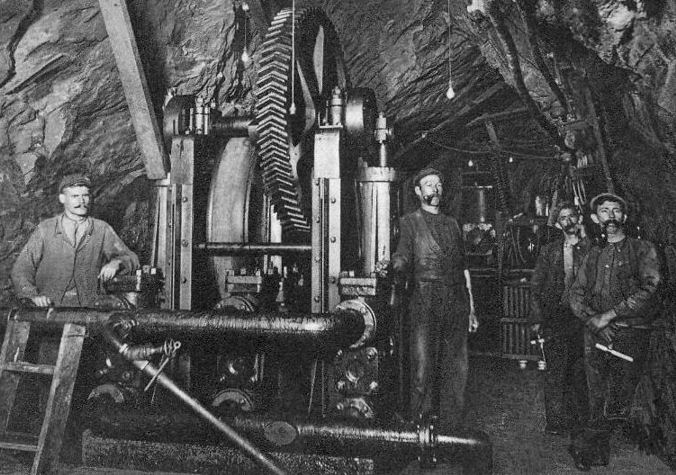
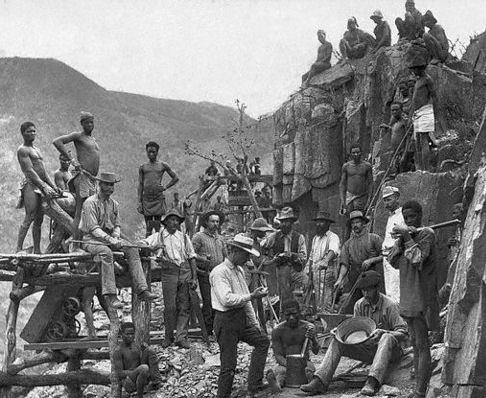

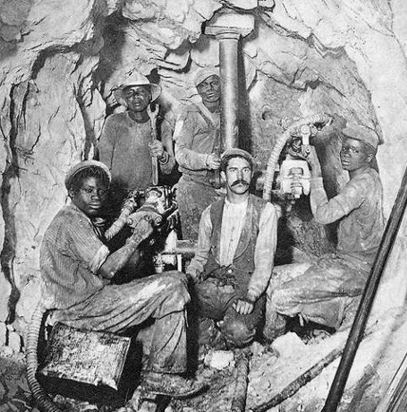

Diamond and gold production may now be well down from their peaks, though South Africa is still no. 2 in gold but South Africa remains a cornucopia of mineral riches. It is the world’s largest producer of chrome, manganese, platinum, vanadium and vermiculite. It is the second largest producer of ilmenite, palladium, rutile and zirconium. It is also the world’s third largest coal exporter.
Diamond and gold discoveries played an important part in the growth of the early South African Republic. A site northeast of Cape Town was discovered to have rich deposits of diamonds, and thousands rushed to the area of Kimberley in an attempt to profit from the discovery. The British later annexed the region of Griqualand West, an area which included the diamond fields. In 1868, the republic attempted to annex areas near newly discovered goldfields, drawing protests from the nearby British colonial government. These annexations later led to the First Boer War of 1880-1881.
Gold was discovered in the area known as Witwatersrand, triggering what would become the Witwatersrand Gold Rush of 1886. Like the diamond discoveries before, the gold rush caused thousands of foreign expatriates to prospect and mine the region. This heightened political tensions in the area, ultimately contributing to the Second Boer War in 1899. Ownership of the diamond and gold mines became concentrated in the hands of a few entrepreneurs, largely of European origin, known as the Randlords.
The gold mining industry continued to grow throughout much of the early 20th century, significantly contributing to the tripling of the economic value of what was then known as the Union of South Africa. In particular, revenue from gold exports provided sufficient capital to purchase much-needed machinery and petroleum products to support an expanding manufacturing base.
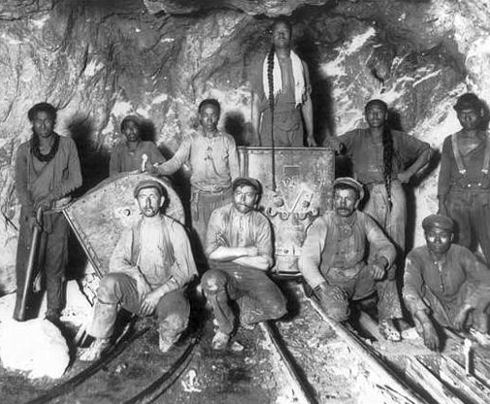
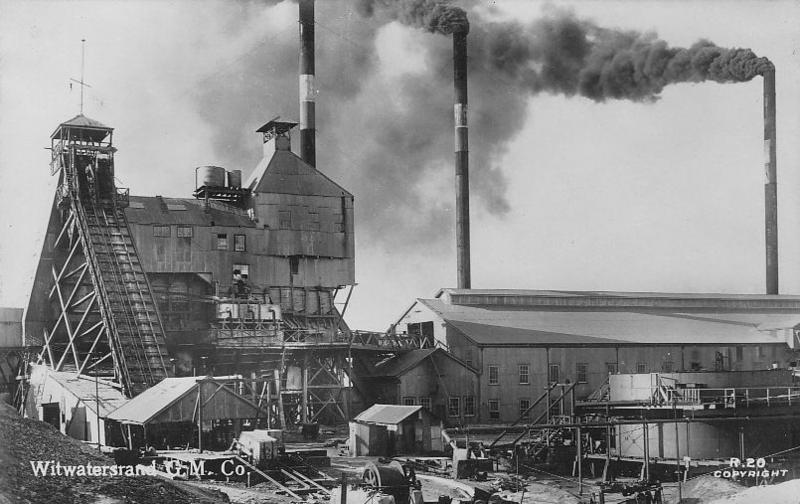
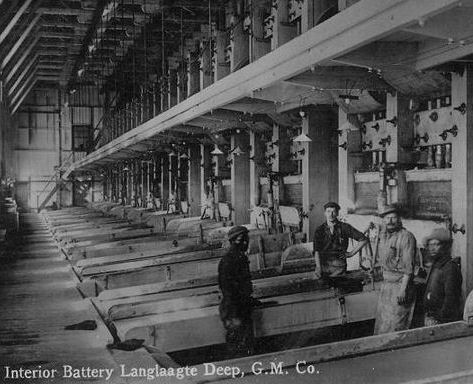
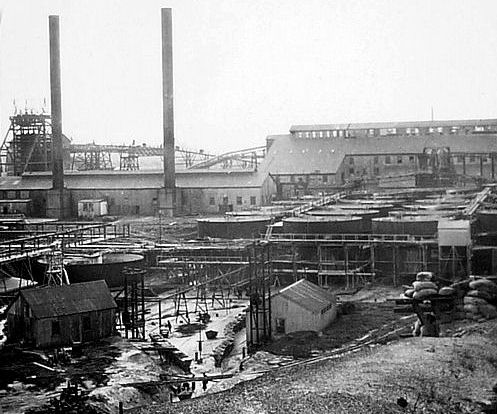
The discovery of the main reef of gold-bearing conglomerate on Langlaagte Farm near Johannesburg in 1886 did not set off the usual gold rush of freelance diggers. From the first moment capital was required to develop deep underground mines.
Fortuitously, that was already at hand, for the discovery of diamonds at Kimberley in 1871 had already attracted substantial capital from British and European banks to finance the emerging diamond mining houses created by Cecil Rhodes, Alfred Beit and Barney Barnato, who eventually united to form De Beers Consolidated Mines. Thus, powerful entrepreneurs were already on hand to exploit the gold.
Cecil Rhodes founded Gold Fields of South Africa (GFSA) in 1887. Rand Mines (now Randgold), Johannesburg Consolidated Investments, General Mining and Union Corporation were quickly in place, all backed by men who had started in diamonds. Only Sir Ernest Oppenheimer’s Anglo American was formed rather later, in 1917, while AngloVaal was founded in 1933. These seven houses provided the foundations of the South African gold industry which was always described as the ‘flywheel’ of the country’s expansion.
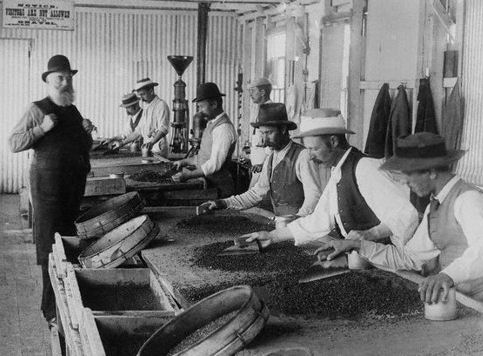
New technology was also forthcoming. Previously mercury had been the principal agent for dissolving out gold from crushed ore, but mercury was only effective enough to recover 65% of this gold. That was not sufficient return given the high costs of operating the mines. What made South African mining viable was a new technique using cyanidation called the MacArthur Forrest process patented in 1887.
By 1898 South African gold output had expanded to 118 tons (3.8 million oz), making it the world’s leading producer, and after the interruption of the Boer War it soared to 280 tons (9 million oz) by 1913.
Thereafter, every few decades major new extensions to the gold reefs were discovered; the ‘West Wits Line’ west of Johannesburg was located by Gold Fields in the 1930s, the Orange Free State field was pioneered by Anglo American from 1946 and Evander developed by Union Corporation from the late 1950s.